
The scrape of a chair against the polished floor cut through the reception like a wrong note.
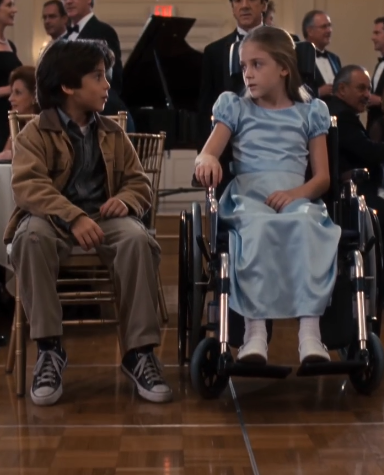
Lila had been sitting near the window, her wheelchair angled just slightly away from the crowd. She had learned, over the past year, how to make herself small in rooms that had not been built for her. She knew where the ramps were. She knew which doorways were wide enough. She knew how to smile when people looked at her with that particular blend of pity and admiration, as if her presence alone was an achievement.
Her father, Victor, had spent most of the evening moving through the guests with a glass of wine in one hand and a story in the other. He told them about her courage. About her recovery. About how proud he was. He said the word proud so many times that it had begun to sound like a substitute for something else.
Lila had heard him say it to a woman in a green dress. She had heard him say it to his business partner. She had heard him say it to a cousin she barely knew. Each time, the words landed somewhere near her, but not on her. They were not a conversation. They were a performance.
Then the chair scraped.
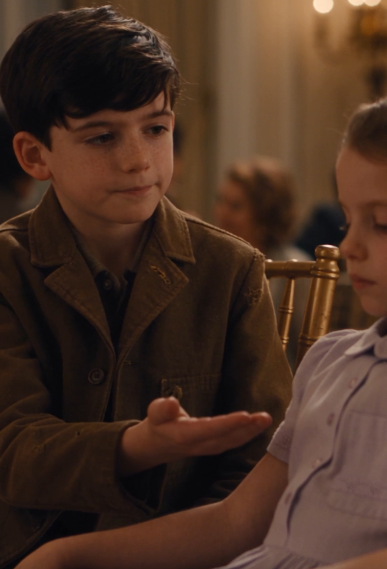
A boy in a mended jacket pulled it beside her wheelchair and sat down. He was not much older than her, maybe seventeen, with dark hair that fell across his forehead and a smile that did not seem to be asking for anything.
“Want to dance?” he asked.
Lila blinked. “Sitting down?”
“Your way.”
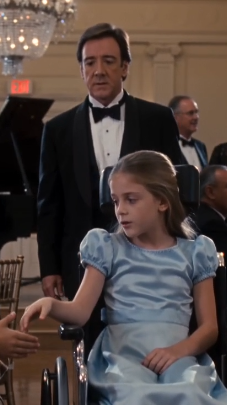
She looked at him for a moment. No one had asked her that all evening. No one had asked what she wanted. They had asked what she needed. They had asked if she was comfortable. They had asked if she wanted another cushion, another drink, another blanket. But no one had asked her to dance.
Before she could answer, her father stepped closer.
“She’s here to watch,” Victor said. His voice was calm, but there was an edge beneath it, the kind of edge that had been sharpened by months of fear.
Lila looked past the boy, past her father, toward the grand piano at the far end of the room. It sat on a small stage, its lid open, its keys catching the low light. She had not touched a piano in public since before the accident. She had touched one in private, in the quiet of her room, with her teacher beside her. But not here. Not with people watching.
“Can you take me over there?” she asked.
Her father moved into their line of sight. “You’re not ready.”
The boy lowered his hand.
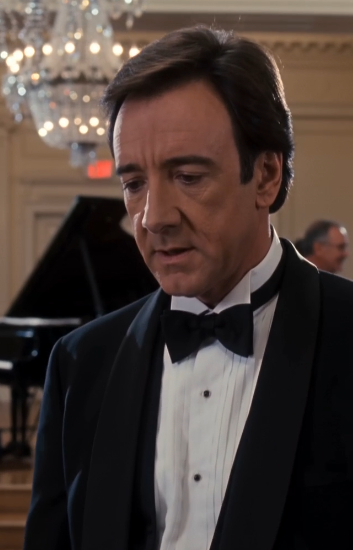
Lila looked up at the man who had spent the evening telling everyone how proud he was of her.
“Then tell them who cancelled my audition.”
The conversation around them stopped. It did not stop all at once. It stopped in ripples, as one guest turned, then another, then another, until the small circle around Lila and Victor had become a silence with edges.
Her father didn’t answer.
Had he been protecting his daughter—or protecting himself from seeing her take a risk? She had asked herself that question many times in the past month, ever since she had learned the truth. She had asked it in the dark of her room, staring at the ceiling. She had asked it when her teacher called to ask why she had not shown up. She had asked it when her father told her, with a careful face, that the school had changed its mind.
Victor looked toward the guests before looking at his daughter.
That hurt Lila more than the silence.
“You told me the school changed its mind,” she said.
He pulled the empty chair closer and sat. The chair was the same one the boy had vacated. It still held the warmth of a stranger.
“I called them,” he said.
“Why?”
“I thought another disappointment would be too much.”
“For me?”
He did not answer immediately.
Lila had played piano long before she began using a wheelchair. She had started when she was six, sitting on a padded bench with her feet dangling above the pedals. Her mother had taken her to lessons every Saturday. Her father had listened from the kitchen, pretending to read the paper, humming along to pieces he did not know. Music had been the one language in their house that did not require translation.
After the accident, everything changed. The hospital, the surgeries, the months of rehabilitation. The wheelchair. The way people looked at her. The way her father looked at her. She had lost many things, but she had refused to lose the piano. During her recovery, practicing had become one of the few parts of her day she could choose for herself. Her teacher, Mrs. Alvarez, had helped her prepare for an audition at the conservatory. She had arranged the access she needed. She had told Lila that the panel was eager to hear her.
And then, without asking, Victor had cancelled it.
“I was frightened,” he admitted.
“So was I.”
He looked up.
“I still wanted to go.”
Noah remained beside them, quiet enough to let the conversation belong to her. He had not moved away. He had not tried to fill the silence with something easy. He simply stood there, his hands in his pockets, as if he understood that some moments were not his to interrupt.
Eventually, Victor asked, “What would you like me to do?”
“Call them tomorrow. Tell them it was your decision.”
“I will.”
“And ask whether I can apply again.”
He nodded.
Lila looked toward the piano.
“Tonight, I want to play something.”
Victor started to stand, then stopped himself.
“Would you like help getting over there?”
“Yes.”
With her permission, he guided her wheelchair across the room. The guests parted. Some of them watched with curiosity. Some with discomfort. A few with something that looked like hope. Noah moved the piano bench aside, and Lila positioned herself at the keyboard. She adjusted the height of her chair. She placed her hands on the keys. The room was so quiet that she could hear the hum of the lights.
She chose a piece she knew well. It was not the one she had prepared for the audition. It was an older piece, one she had played as a child. It began softly, almost tentatively, as if the piano itself was remembering how to speak. Then it grew, phrase by phrase, into something fuller.
Halfway through, she missed a note.
It was not a dramatic mistake. It was a small one, a slip of the finger, a moment of hesitation. But in the silence of the room, it felt enormous.
Victor felt the old urge to intervene—to soften the moment before anyone could react. He wanted to stand up. He wanted to tell the room that she was still recovering. He wanted to explain. He wanted to protect her from the possibility of failure.
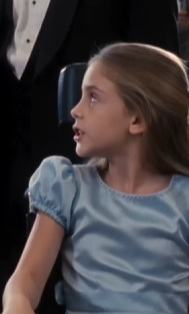
But Lila simply returned to the phrase and continued.
She did not rush. She did not apologize. She did not look at the audience. She played the rest of the piece as if the mistake had been part of the composition all along.
When she finished, her father applauded with everyone else.
He did not tell the room how brave she was.
He leaned close enough for only her to hear.
“I liked the ending.”
Lila smiled.
“I changed it.”
At the audition several weeks later, Victor waited outside. He sat in a hard plastic chair in a hallway that smelled of coffee and old carpet. He did not pace. He did not call anyone. He did not try to fix anything. He simply waited.
For once, the outcome would belong to her.