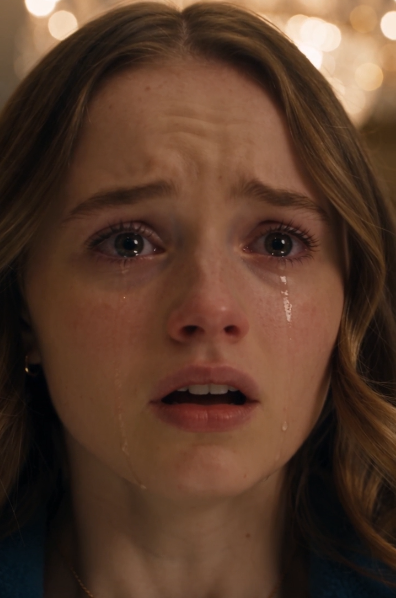
She Pointed at Me in the City’s Fanciest Jewelry Store and Screamed, “My Diamond Ring Is Missing—She Stole It!”104

**Title: **
The jewelry store was called Monroe & Co., and it was the kind of place where the air smelled of expensive perfume and the carpets were so thick you could hear your own heartbeat in the silence. Glass cases gleamed under soft lights, displaying diamonds and sapphires and rubies that cost more than most people made in a year.
I had been saving for two years. Two years of skipping lunches, walking instead of taking the bus, mending my clothes instead of buying new ones. Two years of working double shifts at the diner and taking extra hours at the bookstore. All of it for one thing.
A wedding ring.
Not a big one. Not a fancy one. Just a simple gold band with a small diamond. Something I could afford. Something I could be proud of. Something I could give to the man I loved.
I had walked into Monroe & Co. because it was the only jewelry store in the city that had a ring in my price range. I had walked in with my head held high, my worn purse clutched against my chest, my heart full of hope.
And then a woman had pointed at me and screamed.
—
**The Accusation**
Her name was Beatrice Monroe. I did not know that at the time. I only knew that she was tall, blonde, and dressed in a way that made me feel small just looking at her. She wore a fur coat and diamond earrings and a ring on her finger that was so large it looked like it belonged in a museum.
She was standing near the front counter when I walked in. She was arguing with a saleswoman about something—a custom order, a delivery date, something I did not understand. But when she saw me, she stopped mid-sentence.
Her eyes dropped to my purse. Then to my face. Then to my neck.
“That’s her,” she said. “That’s the one who stole my ring.”
The saleswoman looked confused. “Ma’am?”
“I was here an hour ago. I tried on a ring. I took it off for a moment, and she was standing right next to me. She must have taken it.”
I froze. “I—I just got here. I wasn’t here an hour ago.”
“Liar.”
“I’m not lying. I was at work. I can prove it.”
“I don’t care what you can prove. You have my ring.”
The manager appeared—a tall, cold-eyed man in a tailored suit. He looked at Beatrice, then at me.
“Ma’am,” he said to me, his voice ice, “please empty your bag onto the counter.”
—
**The Humiliation**
I felt my face burn. I felt the eyes of every customer in the store turn toward me. I felt my hands begin to shake.
“I don’t have her ring,” I whispered.
“Then you won’t mind proving it.”
I did not know what else to do. I unzipped my purse. I turned it upside down.
Coins clattered onto the glass counter. Bus tickets. A hair tie. A crumpled receipt. A photograph of my mother, faded at the edges. A small, worn keychain. A tube of lip balm that had melted in the heat.
No ring.
I looked at the manager. “See? I don’t have it.”
Beatrice did not back down. She did not apologize. She did not even blink.
“Then explain the necklace,” she said.
I looked down at my neck. I was wearing a simple chain with a small silver pendant—a lily flower, delicate and intricate, with tiny petals that caught the light.
“That’s a Monroe original,” Beatrice said. “That design was never sold. It was never released. The only way you could have it is if you stole it.”
I touched the pendant. It was the only thing I had from my childhood. The only thing I had from before the orphanage. The only thing I had from the life I never knew.
“I didn’t steal this,” I said. “I’ve had it since I was a baby.”
“Liar.”
“I’m not lying.”
“That necklace is worth more than you make in a year. You couldn’t afford it. You couldn’t possibly own it.”
The manager reached for the intercom. “Security—”
And then a voice came from the staircase.
“What is going on here?”
—
**The Designer**
Isabelle Monroe was not what I expected. She was not tall or cold or intimidating. She was small, with silver hair and kind eyes and a face that had known both beauty and sorrow. She wore a simple black dress and a single strand of pearls. She did not look like the head of a jewelry empire.
She looked like someone’s mother.
She walked down the stairs slowly, her hand resting on the railing. She stopped at the bottom and looked at the scene in front of her—the scattered coins, the crying girl, the accusatory woman.
“What is going on?” she repeated.
Beatrice stepped forward. “Aunt Isabelle, I caught this thief. She stole my ring. And she’s wearing a Monroe original around her neck.”
Isabelle did not look at Beatrice. She looked at me. Her eyes dropped to my neck.
She stopped.
“What did you say?”
“The necklace. It’s—”
Isabelle walked toward me. Her steps were slow, deliberate, as if she were moving through water. She stopped in front of me. She reached out and touched the pendant.
“Where did you get this?”
I felt tears in my eyes. “It’s the only thing I have. From before the orphanage. It was in my crib when they found me.”
Isabelle turned the pendant over. On the back, engraved into the silver, was a tiny lily.
She began to cry.
“I made only one of these,” she said. “For my daughter. The week she was taken from me.”
She looked at me. Her eyes were wide, searching, desperate.
“Your birthday. Is it March 3rd?”
I nodded.
She took my hands. Her fingers were trembling.
“Your name is Lily. You were born in this city. You were taken from the hospital when you were three days old.”
I stared at her. “How do you know that?”
“Because I am your mother.”
—
**The Truth**
The DNA test took three days. The results were 99.9% conclusive.
Clara—the name the orphanage had given me—was Lily Monroe. The baby girl who had been snatched from her bassinet twenty-five years ago.
The woman who had taken me was a nanny who worked for the Monroe family. She had been paid by Diane, Isabelle’s sister-in-law, to do it. According to the terms of the family will, if Isabelle had no heir, the Monroe brand shares would go to Diane. So Diane had arranged for the heir to disappear.
The nanny had done it. She had taken me from the hospital. She had driven me across state lines. She had dropped me at an orphanage.
But she had not been completely heartless. She had left the pendant in my swaddling clothes. A small act of mercy. A tiny piece of my mother, left behind.
And Beatrice—the woman who had accused me of stealing her ring—was Diane’s daughter. She had grown up wealthy, privileged, entitled. She had never been told the truth about her family’s fortune.
The ring she accused me of stealing was never missing. It had fallen into her own glove when she removed it. The security cameras proved it.
Beatrice had to apologize. Publicly. In front of every customer in the store.
Diane was arrested for kidnapping. She was removed from the will. Her shares were returned to Isabelle.
And Isabelle—my mother—made me a wedding ring with her own hands.
—
**The New Beginning**
The months that followed were a blur. I moved into Isabelle’s home—a brownstone on the Upper East Side, filled with photographs and paintings and the smell of fresh flowers. I learned about my family. I learned about my history.
I learned that Isabelle had never stopped looking for me. She had hired investigators. She had posted rewards. She had spent twenty-five years hoping, praying, waiting.
And I had been there all along. Just across the city. Just out of reach.
My fiancé, David, stood by me through all of it. He had been the one who had pushed me to go to Monroe & Co. in the first place. He had been the one who had believed in me when I doubted myself. He had been the one who had held me while I cried.
We got married six months later. It was a small ceremony—just family and close friends. Isabelle sat in the front row. David’s parents sat behind her. My adoptive parents—the couple who had raised me after the orphanage—sat beside them.
I wore the pendant. I wore the ring my mother had made.
And I was happy.
—
**The Letter**
A week after the wedding, a letter arrived at Isabelle’s brownstone. It was from the nanny—the woman who had taken me. She was in a nursing home now, old and sick and full of regret.
*Dear Isabelle,*
*I know you will never forgive me. I do not expect you to. But I need to tell you something before I die.*
*That night, I did not only take one child.*
*You gave birth to twins.*
*I took one. I left the other. I do not know what happened to her. But I know she exists.*
*I am sorry. I am so sorry.*
*The nanny*
—
**The Question**
Where was Clara’s twin sister?
That is a story for another time.