The Boy Walked Into the State’s Most Prestigious Competition Hugging an Old Violin—Then a Wealthy Mother Swung Her Bag and Knocked the Case to the Floor.111

**Title: **
The competition was called the Ashford Youth Virtuoso Award, and it was the most prestigious musical competition in the state. Students from the finest conservatories, the most expensive private academies, the most elite music programs—all of them gathered once a year to compete for a prize that could launch a career. The winner received a full scholarship to the Ashford Academy, a recording contract, and the kind of recognition that opened doors for the rest of their lives.
Theo was twelve years old. He was small for his age, with dark hair that needed cutting and clothes that had been mended more than once. He was carrying a violin case—old, battered, held together with tape and hope. The case had been his father’s. The violin inside had been his father’s too.
He walked into the auditorium holding the case with both arms, the way you hold something precious. The other competitors looked at him and whispered. The parents looked at him and frowned. He did not belong here. He knew he did not belong here. But he had earned his place.
He had spent months collecting cans and bottles, walking the streets of the city, saving every penny. He had used the money to pay the entry fee. He had practiced every night in the shelter, playing softly so he would not wake the other families. He had learned the piece from his father, note by note, in the quiet hours after dinner.
He was here because he had to be. He was here because his father had told him that music was the one thing that could never be taken away.
He was walking toward the stage door when a woman stepped in front of him.
—
**The Woman**
Her name was Beatrice Langley. She was tall, blonde, dressed in a suit that cost more than Theo’s entire wardrobe. She was the mother of one of the other competitors—a girl named Penelope who had been trained by private tutors since she was four years old. Penelope was expected to win. Penelope had always won.
Beatrice looked at Theo. She looked at his clothes. She looked at his violin case.
And she swung her bag.
The bag hit the case. The case flew out of Theo’s hands and crashed to the floor. The latch popped open. The violin spilled out—old, worn, but beautiful. The wood gleamed under the fluorescent lights.
Theo dropped to his knees. He picked up the violin with trembling hands. He checked the strings, the bridge, the f-holes. He ran his fingers over the wood.
He let out a breath.
“It’s okay,” he whispered. “It’s okay. Dad’s violin is okay.”
Beatrice laughed. “That thing belongs in a dumpster. You don’t belong on this stage.”
Theo looked up at her. His eyes were not angry. They were not sad. They were calm.
“My father says music doesn’t care where you come from. It only cares if you’re telling the truth.”
He stood up. He walked past her. He walked onto the stage.
—
**The Performance**
The auditorium was filled with people—judges, teachers, parents, students. The lights were bright. The stage was polished. The piano sat in the corner, waiting for its turn.
Theo walked to the center of the stage. He held the violin under his chin. He raised the bow.
“I want to dedicate this piece to my father,” he said. “It’s called ‘Come Home.'”
The first note filled the room.
It was not a complicated piece. It was not flashy. It was not designed to show off technique or speed or range. It was simple. It was quiet. It was a conversation between a father and a son.
The melody rose and fell like a heartbeat. It told a story—a story of loss and longing and love. It told a story of a man who had lost everything but had never stopped hoping. It told a story of a boy who had learned to play in the dark, in a shelter, in a place where no one expected music to exist.
The audience went silent.
And in the front row, the president of the judging panel dropped her pen.
—
**The Judge**
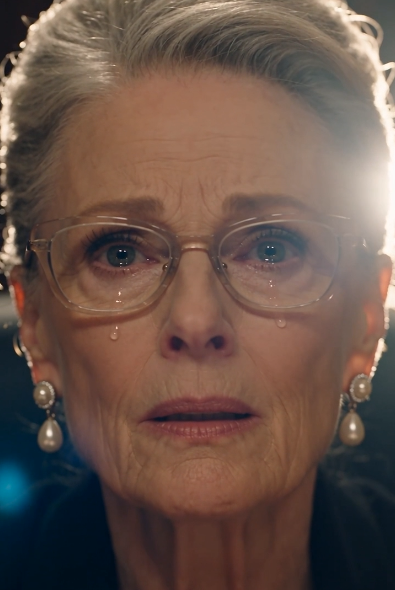
Catherine Ashford was seventy-two years old. She was the founder of the Ashford Academy, the sponsor of the competition, and one of the most respected music patrons in the country. She had discovered some of the greatest talents of the past fifty years. She had sat on this panel for decades. She had heard thousands of performances.
She had never heard this piece.
She pressed her hand against her mouth. Tears streamed down her face. She stood up.
“Where did you learn that piece?”
Theo lowered his violin. He looked at her.
“My father wrote it. He plays it every night at the shelter.”
Catherine gripped the edge of the table. Her voice was barely a whisper.
“My son wrote that piece. When he was fifteen years old.”
Theo looked at her. He did not flinch.
“My father said his mother told him never to come home.”
—
**The Story**
Fifteen years ago, Daniel Ashford had been a prodigy. He had been the youngest student ever accepted to the Ashford Academy. He had been the pride of his mother’s life. He had been destined for greatness.
And then he had met Elena.
She was a singer at a coffee shop. She was not famous. She was not rich. She was not connected. But she was kind. She was warm. She was everything Daniel had never known.
He fell in love. He dropped out of the academy. He married her.
Catherine had been furious. She had called it a betrayal. She had called Elena a gold digger. She had told Daniel that if he walked out that door, he should never come back.
He walked out.
He never came back.
Elena died when Theo was six years old. Daniel lost his job. He lost his apartment. He lost everything. He and Theo had been living in shelters ever since.
But every night, Daniel played the violin. Every night, he taught Theo the notes. Every night, he told him stories about the music—about the beauty, the joy, the hope.
He never told him about his mother. He never told him about the academy. He never told him about the life he had left behind.
Until now.
—
**The Reunion**
Catherine followed Theo home.
She stood outside the shelter, listening. She heard the music—the same piece, the same melody, the same story. She heard Daniel playing.
She walked inside.
Daniel looked up. His bow stopped. His eyes went wide.
“Mom?”
“I was wrong,” Catherine said. “I was so wrong.”
She crossed the room. She knelt down in front of him.
“I’m sorry. I’m so sorry.”
Daniel began to cry. He had not cried in years. He had not let himself. But now, with his mother kneeling in front of him, with his son standing beside him, he let the tears fall.
They held each other. Fifteen years of silence, of pain, of regret—all of it poured out in that embrace.
—
**The Aftermath**
Theo won first place. He played his father’s piece, and the judges were unanimous. The audience gave him a standing ovation. The video of his performance went viral.
Beatrice Langley was forced to apologize. The footage of her knocking the violin case to the floor had spread across the internet. Penelope withdrew from the competition in shame. Beatrice issued a public statement, but it was too late. The damage was done.
Daniel was offered a teaching position at the Ashford Academy—the same academy he had walked away from fifteen years ago. He accepted.
Catherine moved into a smaller house. She gave her son the space he needed to rebuild his life. She spent time with Theo, listening to him play, learning about the grandson she had never known.
And one day, when Catherine was helping Daniel unpack boxes in his new apartment, she found a stack of letters.
They were addressed to her. They were all from Daniel. They had been written over the course of fifteen years.
None of them had been opened.
—
**The Question**
If Catherine had never received these letters, who had hidden them?
That is a question for another time.